







There is an island in the heart of the Atlantic where you can feel as though you have crossed an entire continent in just 1,600 km². That island is Fuerteventura — a destination that offers far more than just sunshine and white-sand beaches. It is a lunar landscape defined by ancient volcanoes, colonial villages, and raw, untamed energy.
Many visitors make the mistake of sticking solely to the northern dunes or the southern resorts, missing the island’s rugged interior and the hidden gems that make this UNESCO Biosphere Reserve so unique.
To help you experience the best of the island, the HD Lobos Natura team has designed a curated four-day itinerary. This route minimises 360-degree experience: from total relaxation to volcanic adventure.
Essential planning: getting around and where to stay
Before setting off on your adventure, there are two essentials to consider:
- Car hire: Fuerteventura is the largest island in the archipelago. While public transport is reliable, it cannot reach the most magical spots like Cofete or the remote viewpoints of Betancuria. Hiring a car is highly recommended. Expert tip: While a standard hatchback is fine for most roads, an SUV provides extra peace of mind on the unpaved dirt tracks.
- Where to stay: for a versatile base, the north is hard to beat. Corralejo is an excellent choice, offering a wide range of boutique stays and family hotels with all modern comforts you require.
Day 1: the wild north and a hidden gem
The best way to begin is by immersing yourself in the north, where Afrikan-style geology meets traditional Canarian spirit.
Corralejo natural park dunes
This the natural jewel of Fuerteventura. These aren’t just sand dunes; they are a living ecosystem covering over 2,600 hectares. Formed over millennia from crushed shells and marine organisms, they are entirely organic in origin.
Top tip: Arrive by 09:00 to spot the tracks of local wildlife, such as sand runners and lizards, before the Atlantic breeze or the crowds brush them away. Walk further inland, away from the FV-1 road, to enjoy the vast scale of the dunes with the silhouette of Lobos Island on the horizon.
Lobos Island: a peaceful retreat
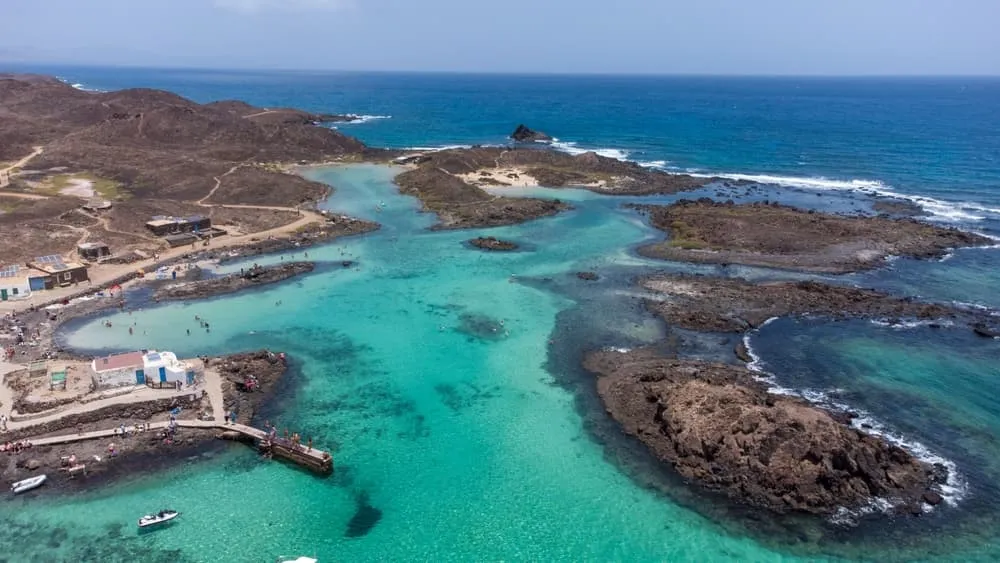
Named after the monk seals (or sea lions) that once inhabited its shores, this small island is now a protected sanctuary.
Take the 15 minutes ferry from Corralejo harbour to reach this car-free haven. You’ll discover “El Puertito”, a natural turquoise lagoon surrounded by small volcanic stone fishermen’s huts.
For hikers: Follow the trail to the La Caldera volcano. The 30 minutes climb over loose stone paths rewards you with spectacular views across the Bocaina Strait to Lanzarote. Ensure you wear sturdy, closed-toe shoes.
Day 2: the historic heart of the island
On the second day, swap the coastal blues for the rich ochres and reds of the interior, where the island’s history was forged.
Betancuria: the island’s first capital
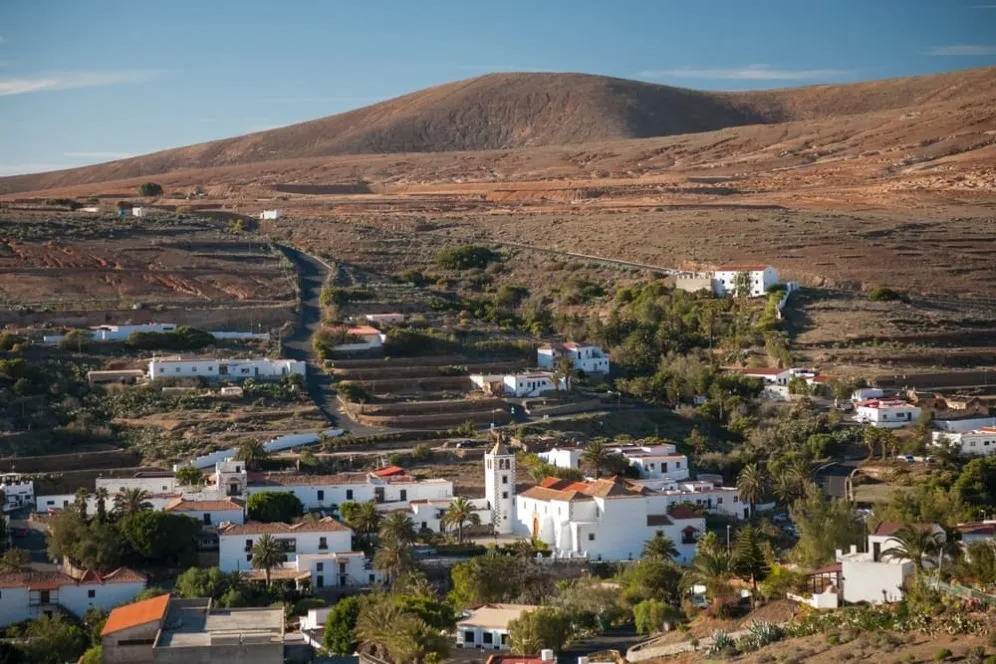
Tucked away in a lush valley to protect it from pirate raids, Betancuria was founded by Jean de Bethencourt and remains a green oasis.
- Must-see: the Church of Santa María features stunning Mudejar coffered ceilings, a hallmark of Spanish-Islamic architectural influence.
- Culture: visit the Archaeological Museum to learn about the Mahos — the island’s indigenous people who lived in circular stone dwellings.
The Viewpoints: Guise, Ayose, and Morro Velosa
Heading along the winding FV-30, stop at the colossal bronze statues of Guise and Ayose, the two kings who ruled the island’s ancient kingdoms before the conquest.
- Did you know? Fuerteventura was once divided by a wall separating the kingdoms of Maxorata and Jandía, remnants can still be spotted today.
- Morro Velosa: Designed by the legendary Lanzarote artist César Manrique, this viewpoint offers the finest panoramic views of the island’s rolling “wrinkled” hills.
Taste Majorero cheese
The hardy Majorero goat produces milk for one of the world 's most awarded cheeses. Visit a local quesería (cheesery) to sample Majorero cheese — try the pimentón (paprika-rubbed) or gofio (toasted grain) varieties for a truly authentic taste.
Day 3: the rugged west coast
Leave tradition behind for Fuerteventura’s oldest geological wonders and its most “bohemian” coastal spots.
Ajuy: where the archipelago began
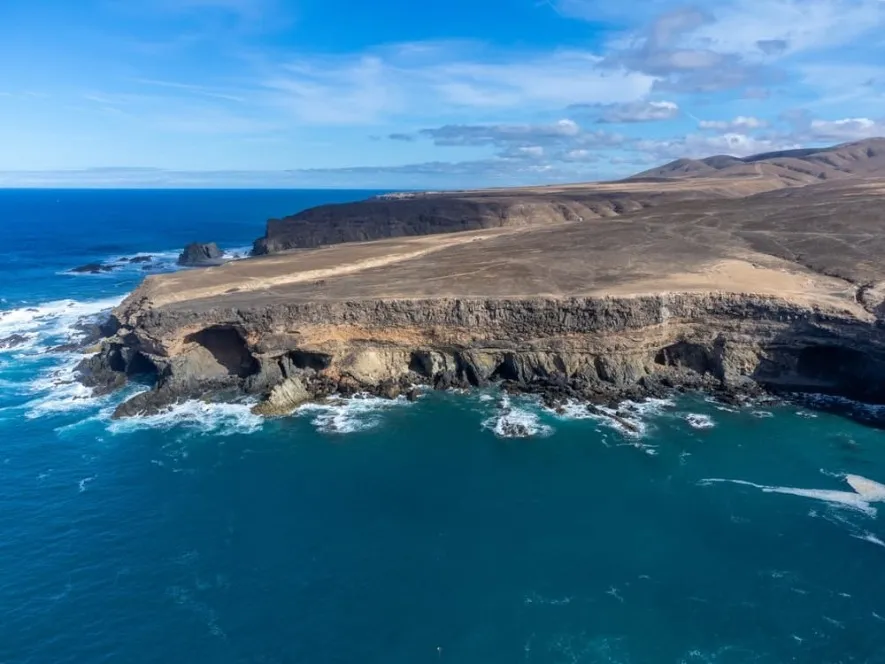
The black-sand beaches of Ajuy are home to famous sea caves. This basalt complex contains ocean sediments dating back to the Jurassic period — older than the rest of the Canary Islands themselves.
- Dinning: Ajuy is famed for its seafront fish restaurants. Order papas arrugadas (wrinkly potatoes) with mojo sauce and the “fresh catch of the day”, usually served a la espalda (grilled open-style).
To reach Ajuy from the north, take the FV-1 to Puerto del Rosario, then the FV-20 to Tuineje, connect with the FV-30 to Pájara, and finally take the FV-621 to Ajuy.
El Cotillo: surf and sunsets
Once a quiet fishing village, El Cotillo is now the island’s “cool” hub.
- La Concha Beach: a crescent of white sand with calm, crystal-clear water, perfect for snorkelling.
- Piedra Playa: located just south of the village, this is surfers’ territory, where powerful Atlantic rollers crash against dramatic cliffs.
Day 4: the Jandía Peninsula
The final day takes you to the deep south. Distances are longer here, but the sense of total solitude is the ultimate reward.
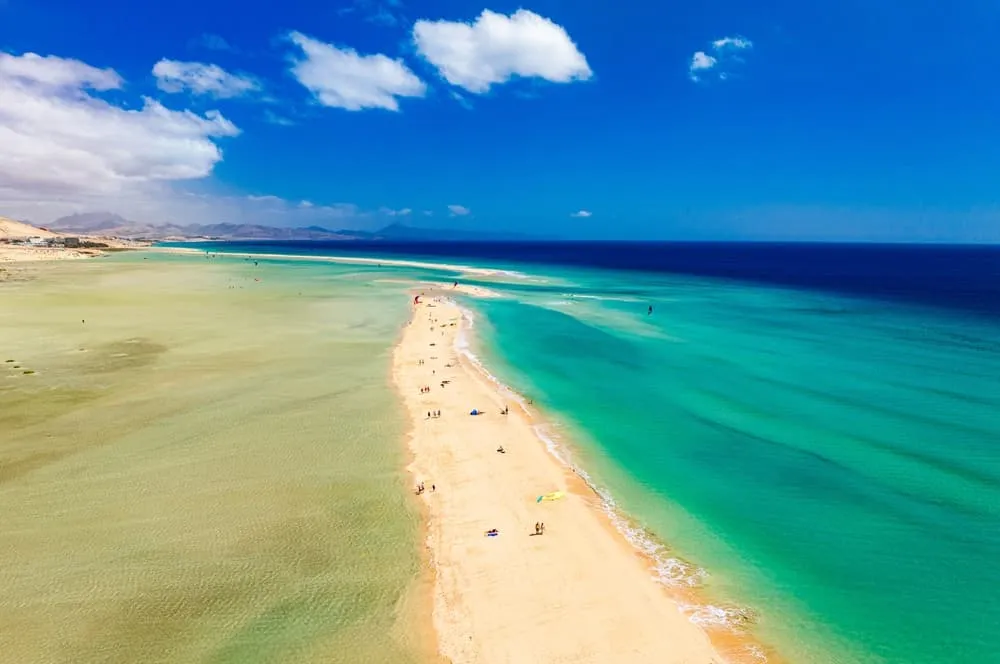
Sotavento Beach: a tidal wonder
Sotavento is world-renowned for its 4 km long tidal lagoon. This isn’t just a beach; it’s a shifting natural phenomenon. Check the tide charts before you go; watching the lagoon fill with shallow, turquoise water while you stand in the middle of the desert is a highlight of any trip.
The road to Cofete
Cofete is not just a beach; it is a mystical experience. Accessed via an 18 km of unpaved track, it sits at the foot of the soaring Jandía mountains.
Another landmark not to missed is Villa Winter. Shrouded in countless Second World War legends, it is rumored to have served as a secret supply base for German U-boats. Whether these tales are true or not, the sight of this solitary building standing in the middle of nowhere is truly remarkable.
To bring your four days in Fuerteventura to a close and return to civilization, Morro Jable is the perfect final stop. Stroll along its urban beach, dominated by its impressive lighthouse, and enjoy one last dinner overlooking the vast Atlantic Ocean. It is the ideal gateway to discovering one of the most impressive natural landscapes in the Canary Islands: Jandía Natural Park.
|
Activity |
Estimated duration |
Approx. cost |
Best time to visit |
|
Lobos Island |
4–5 hours |
€15–€20 (Ferry) |
Morning |
|
Corralejo Dunes |
1–2 hours |
Free |
Sunrise/ Early |
|
Ajuy Caves |
1.5 hours |
Free |
Afternoon |
|
Cofete |
5–6 hours |
Fuel only |
All day |
Why Fuerteventura leaves a lasting impression
Planning a four-day trip to Fuerteventura might seem like a tall order, but as this itinerary shows, the island rewards those who follow a thoughtful route. We have journeyed from the soft, rolling dunes of the north to the raw, ancient geology of Ajuy, ending with the breathtaking vastness of Cofete.
Fuerteventura is far more than just a typical sun-and-sea destination; it is a place where the pace of life slows down, the Atlantic breeze clears the mind, and no two sunsets ever feel the same.
