







Just minutes off the coast of Fuerteventura, Isla de Lobos exists on its own terms. No cars, no noise, no concessions to the modern world — just volcanic rock underfoot, lagoons in shades of turquoise that defy the Atlantic light, and a silence so complete it has its own texture. In this guide, you'll find everything you need to plan your visit: what to see, how to get there, and why this tiny, unhurried island continues to be one of the most quietly spectacular places in the Canary Islands.
You’re standing at the harbour of Corralejo. A salty sea breeze fills the air while seagulls circle above the Atlantic. Just 2 kilometres away, a small and mysterious island rises from the ocean — a natural paradise with no paved roads, where silence is broken only by the calls of shearwaters. The water glows in an almost unreal shade of turquoise, framed by volcanic landscapes and untouched coves.
With a surface of only 4.5 square kilometres, Isla de Lobos is one of those rare places that has managed to preserve its original beauty. Protected as a natural park, it remains a refuge for travellers looking for more than sun loungers and hotel buffets.
You may be wondering whether a trip to Isla de Lobos is really worth it — or if such a small island justifies the ticket. The answer is simple: absolutely. Because this is where Fuerteventura still reminds visitors what the Canary Islands once felt like: wild, peaceful, and filled with small moments that stay with you long after the journey ends.
We’ll show you what makes this little island so special — and how to experience it at its very best.
7 things to do on Isla de Lobos
Isla de Lobos may be small, but once you explore it without rushing, you quickly realise there is far more to discover than you first expect. Every path leads to a place worth stopping for, and every cove has its own character.
Here is what awaits you on Isla de Lobos.
1. Hike up Montaña de la Caldera
The most demanding part of the day — but absolutely worth the effort. At 127 metres high, Montaña de la Caldera is the highest point on the island and rewards visitors with spectacular views in every direction.
The trail is clearly marked and crosses a dramatic volcanic landscape. The final section becomes steeper, but once you reach the top, the panorama is one of the most impressive in all of Fuerteventura.
To the south, still on Isla de Lobos, you can spot Playa de la Concha. In the distance lie the dunes of Corralejo and the coastline of Fuerteventura, while to the north the volcanic silhouettes of Lanzarote rise from the Atlantic Ocean.
2. Swim at Puertito de Lobos
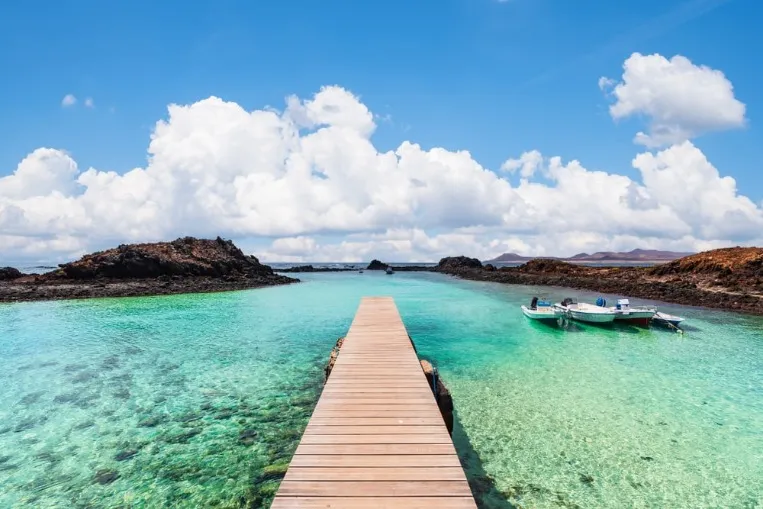
Anyone who has searched for Isla de Lobos online will probably recognise this place. Puertito de Lobos is the island’s most iconic image — and in reality, it’s even more beautiful.
Protected by dark volcanic rocks, small natural lagoons create calm pools of turquoise water that look almost like a natural infinity pool. The wooden jetty invites you to take off your shoes, slow down for a moment, and dive into the crystal-clear water.
Puertito is the perfect spot for the first swim of the day, surrounded by a small fishing settlement that still gives the island its simple and authentic character.
3. Relax at Playa de La Concha
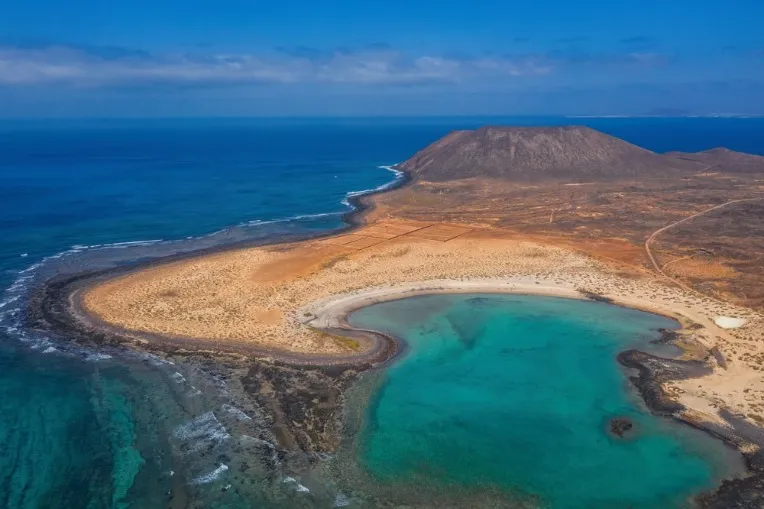
The crescent-shaped Playa de La Concha — also known as Playa de la Caldera — is the counterpart to Isla de Lobos’ volcanic landscape. With its white, fine sand, calm crystal-clear water, and sheltered bay, it feels completely different from the island’s rugged terrain.
It’s the perfect place for families, a relaxing swim, or simply doing nothing for a while while looking out across the Atlantic.
4. Visit Faro de Martiño
At the northernmost point of the island stands Faro de Martiño, a lighthouse dating back to 1865 that was once much more than a simple navigation point. The lighthouse keeper and his family lived here, and it was also the birthplace of writer Josefina Plá, one of the most important voices in 20th-century Paraguayan literature.
The walk to the lighthouse crosses the island’s stark volcanic landscape, passing low coastal vegetation and wide-open sea views along the way. A place for anyone looking to truly experience silence and solitude.
5. Snorkel in the protected waters
On Isla de Lobos, what lies beneath the surface is just as impressive as the landscape above it. The waters surrounding the island are part of a protected marine area with a remarkable variety of underwater life.
Even with basic snorkelling equipment, you can spot parrotfish, seabream, and small rays — often with visibility of more than 20 metres for much of the year.
6. Take a circular hike through the Natural Park
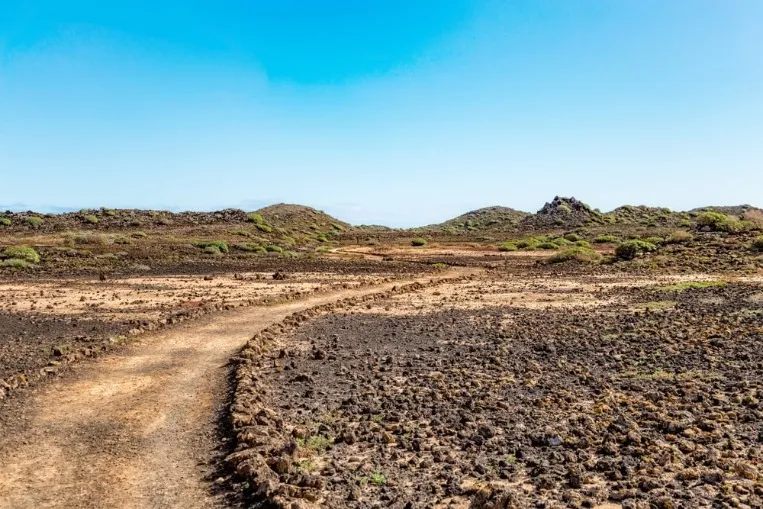
Isla de Lobos has several marked hiking trails that form part of the Canary Islands’ long-distance route GR-131. The best way to truly experience the island is by taking the circular route, which takes around three to four hours depending on your pace.
Along the way, you’ll discover the different sides of the natural park: small volcanic formations known as hornitos, coastal salt marshes, and a surprisingly diverse plant life. If you look closely, you may even spot the “Siempreviva de Lobos” (Limonium ovalifolium canariense) — a rare flower that grows only on Isla de Lobos and nowhere else in the world.
7. Lunch at Chiringuito de Lobos
There’s only one restaurant on the island: the small Chiringuito in Puertito de Lobos, located right by the lagoon and run by the family of “Antoñito el Farero”. Simple and authentic, it has become an essential part of the experience for many visitors. The menu is usually fixed, but eating here is more than just having lunch.
Good to know: space is very limited, so it’s best to reserve as soon as you arrive on the island.
Logistics & planning: how to properly prepare your trip to Isla de Lobos
To enjoy Isla de Lobos in a relaxed way, a bit of planning makes all the difference. The island is a protected natural park with a limited number of daily visitors, so both the ferry and access should be organised in advance.
How to get to Isla de Lobos
Most boats depart from the harbour in Corralejo, in the north of Fuerteventura. Depending on your budget and travel style, there are several options:
- Regular ferry: The classic choice for day trips. Several operators connect Corralejo with Isla de Lobos in around 15–20 minutes, with fixed departures in the morning (around 10:00) and return trips in the afternoon (17:00–18:00, depending on the season).
- Water taxi: Small speedboats take you to the island in about 10 minutes. Ideal if you want to arrive early and enjoy the quieter morning hours.
- Catamaran or private tours: Some excursions combine the crossing with snorkelling, onboard catering, or additional stops. A good option if you prefer to start the experience already on the water.
Access to the island requires a permit
As Isla de Lobos is a protected natural park, the number of daily visitors is strictly limited. A free permit must be obtained in advance — without it, access to the island is not allowed. The Cabildo de Fuerteventura limits entry to 200 people at a time (up to 400 visitors per day in total).
- Where to apply? Through the official Isla de Lobos permit website of the Cabildo de Fuerteventura
- Time slots: Morning (10:00am–2:00pm) or afternoon (2:00pm–6:00pm)
- When to book? Up to five days in advance. During holidays and peak season, permits are often sold out quickly.
- Don’t forget your QR-Code: After booking, you will receive a QR code that is checked upon arrival on the island. Save it to your phone before you leave or print it in advance, as mobile coverage on the island can be unreliable.
Getting around on Isla de Lobos
As soon as you arrive at the small harbour of Puertito de Lobos, everyday life quickly fades away. There are no roads and no motorised vehicles on the island — respect for the trails and the natural environment is essential.
- On foot: The hiking paths are well marked and connect the main points of the island. To protect nesting areas and endemic plant species, visitors must stay on the designated trails.
- By bike: Cycling is only allowed on the main track between the harbour and Faro de Martiño. The terrain is mostly loose volcanic rock, so road bikes are not a good choice.
- Footwear: Sturdy shoes with good grip are highly recommended, especially for the hike up Montaña de la Caldera.
There’s more to explore – if you want to discover more of the island group, here you’ll find tips for four days on Fuerteventura.
When is the best time to visit Isla de Lobos?
The climate in the Canary Islands is mild all year round — it’s no surprise they are known as the islands of “eternal spring.” Still, there are seasonal differences that can noticeably influence your experience on Isla de Lobos.
- September and October: For many locals, this is the best time to visit. The trade winds ease, the sea is calm and clear, and temperatures remain pleasantly warm. It’s also one of the best periods for snorkelling.
- Spring: After the winter rains, the island often appears slightly greener than usual. Ideal for longer hikes and more active exploration.
- Summer: The most popular and busiest season. If you visit in July or August, it’s best to go in the morning, as midday heat can be intense and there is very little shade on the island. Don’t forget sun protection and plenty of water.
- Winter: The quietest time of year on the island. Fewer visitors and cooler temperatures make it great for hiking, though less ideal for swimming.
HD Lobos Natura Fuerteventura: your retreat inspired by Isla de Lobos
Many visitors are surprised to learn that Isla de Lobos does not owe its name to wolves, but to the monk seals — “lobos marinos” — that once lived in large numbers along its shores until the 15th century. Silent sovereigns of the lagoons, long gone, but not forgotten.
HD Lobos Natura Fuerteventura in Corralejo carries this name as a tribute to this original, wild nature — and to the responsibility of preserving the balance between people and the sea.
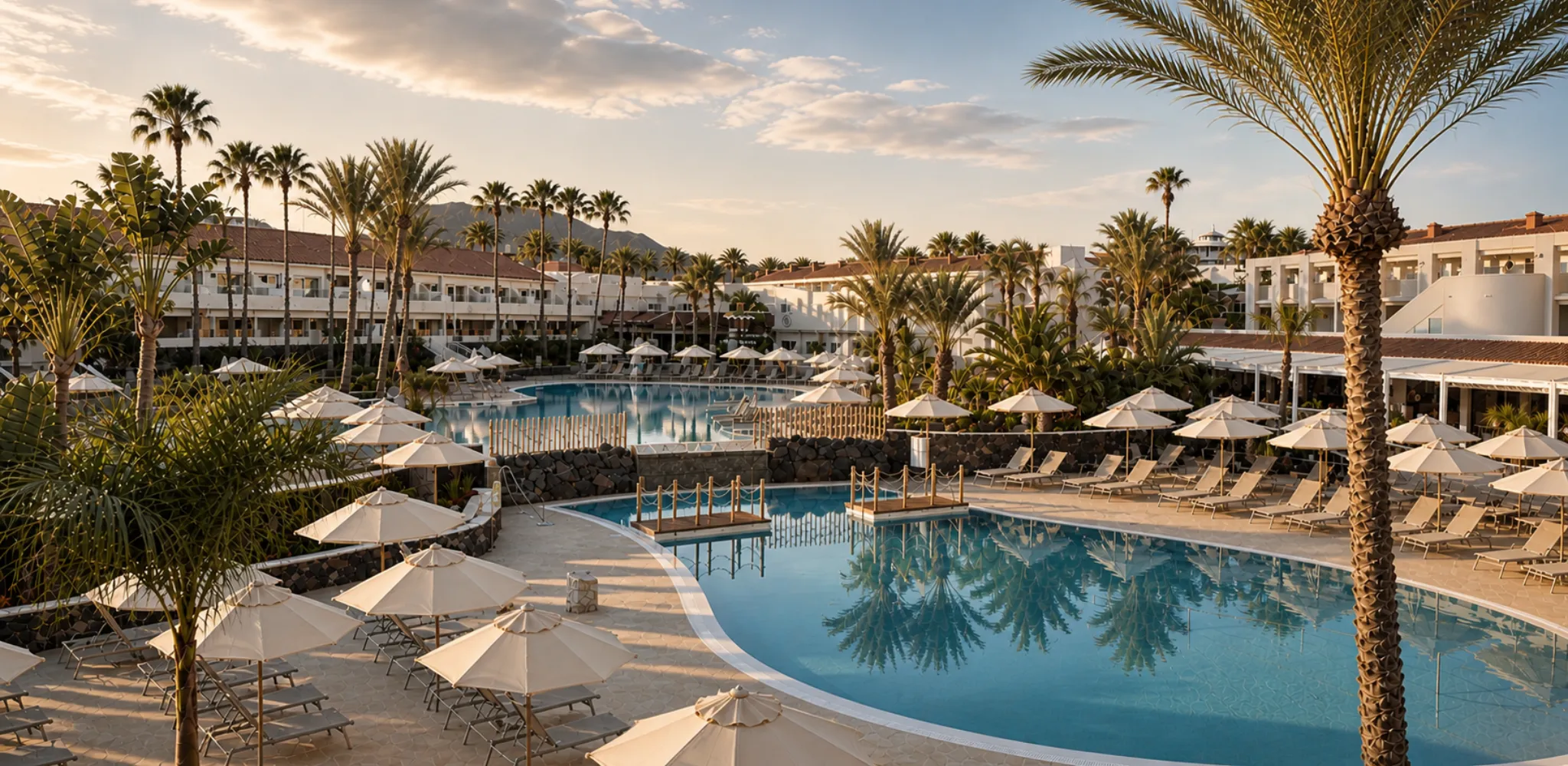
Our hotel is more than just a place to stay — it is a concept of wellbeing. Just as Isla de Lobos protects a space where nature can thrive freely, at HD Lobos Natura we create a space where people can slow down and reconnect.
With architecture that places natural light at its centre, native gardens and open, flowing spaces, we aim to reflect the same sense of freedom you feel walking along Playa de La Concha. A retreat for slow travel, where comfort never comes at the expense of respect for the volcanic landscape.
And with everything close by: the harbour of Corralejo is just a short walk away — making it easy to be among the first to reach Isla de Lobos in the morning, and to return in the evening to relax, watching the sunset over the pools and gardens.
A journey to the true essence of Canary Islands
A visit to Isla de Lobos is a moment of stillness and simplicity. It shows that, with the right protection, nature can thrive in its purest form. From the summit of the volcano to the quiet lagoons, every place invites you to leave digital noise behind and reconnect with yourself and the landscape.
HD Lobos Natura Fuerteventura is your starting point for this experience — and your retreat afterwards. A place to rest, right next to one of the Atlantic's best-kept natural secrets — and the perfect base for making the most of it.
